
By Celeste
The most beautiful part of being a flower farmer is realizing how beautiful everything looks when it’s blooming.
I can still vividly remember picking out the seeds and sowing them into the flats. They grow little by little until they reach their most precious moment—blooming and sparking joy for someone else. There is something so special about witnessing that transformation every single season.
It’s so easy for me to think about my boys when I look at the flowers.
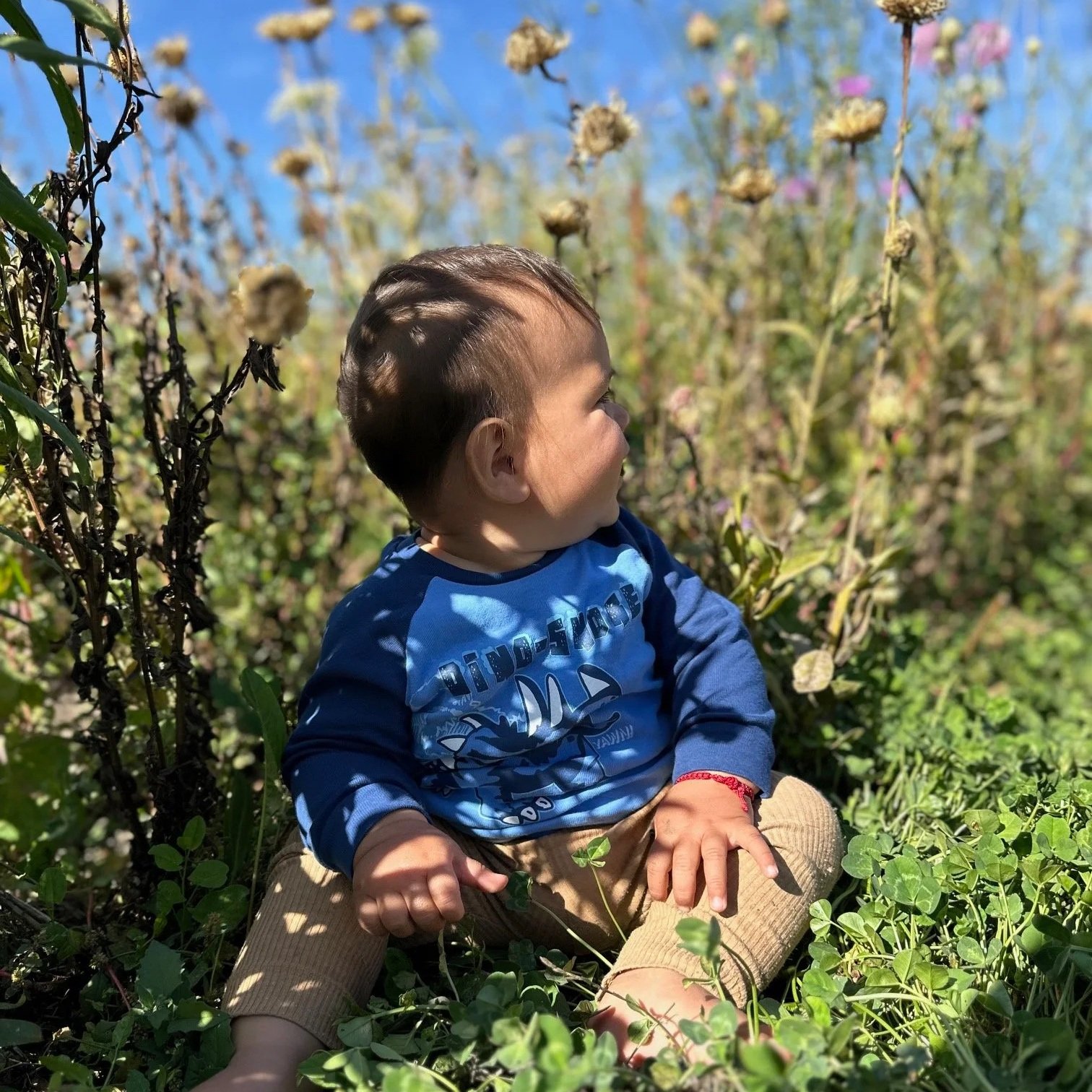
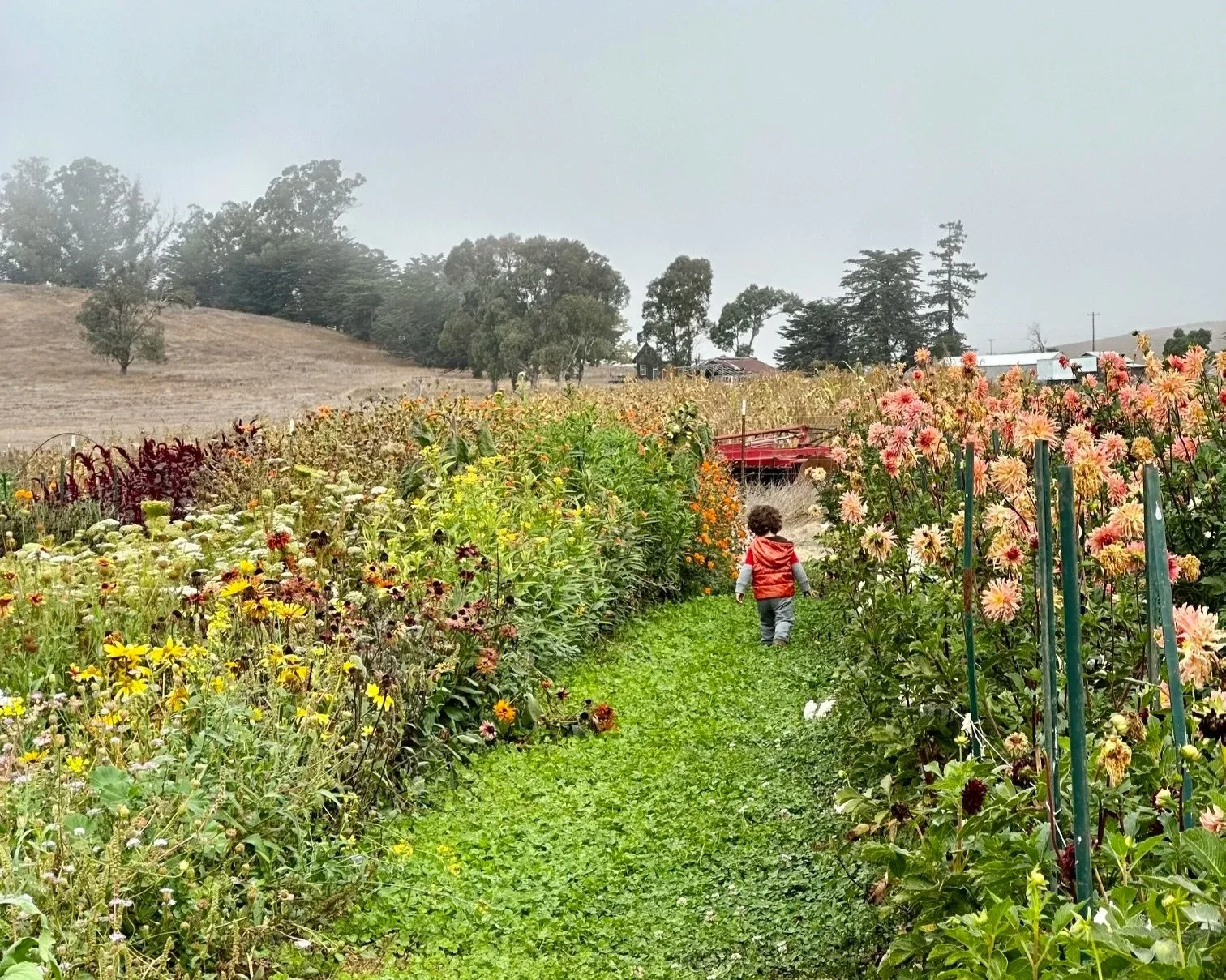
I can still remember when my oldest was a baby, discovering the world for the first time. I would hand him cempasúchil petals to taste, along with little bites of basil, shiso, and other edible treasures from the field. I remember him getting “lost” between the rows of amaranth and cosmos, completely immersed in his own little adventure.
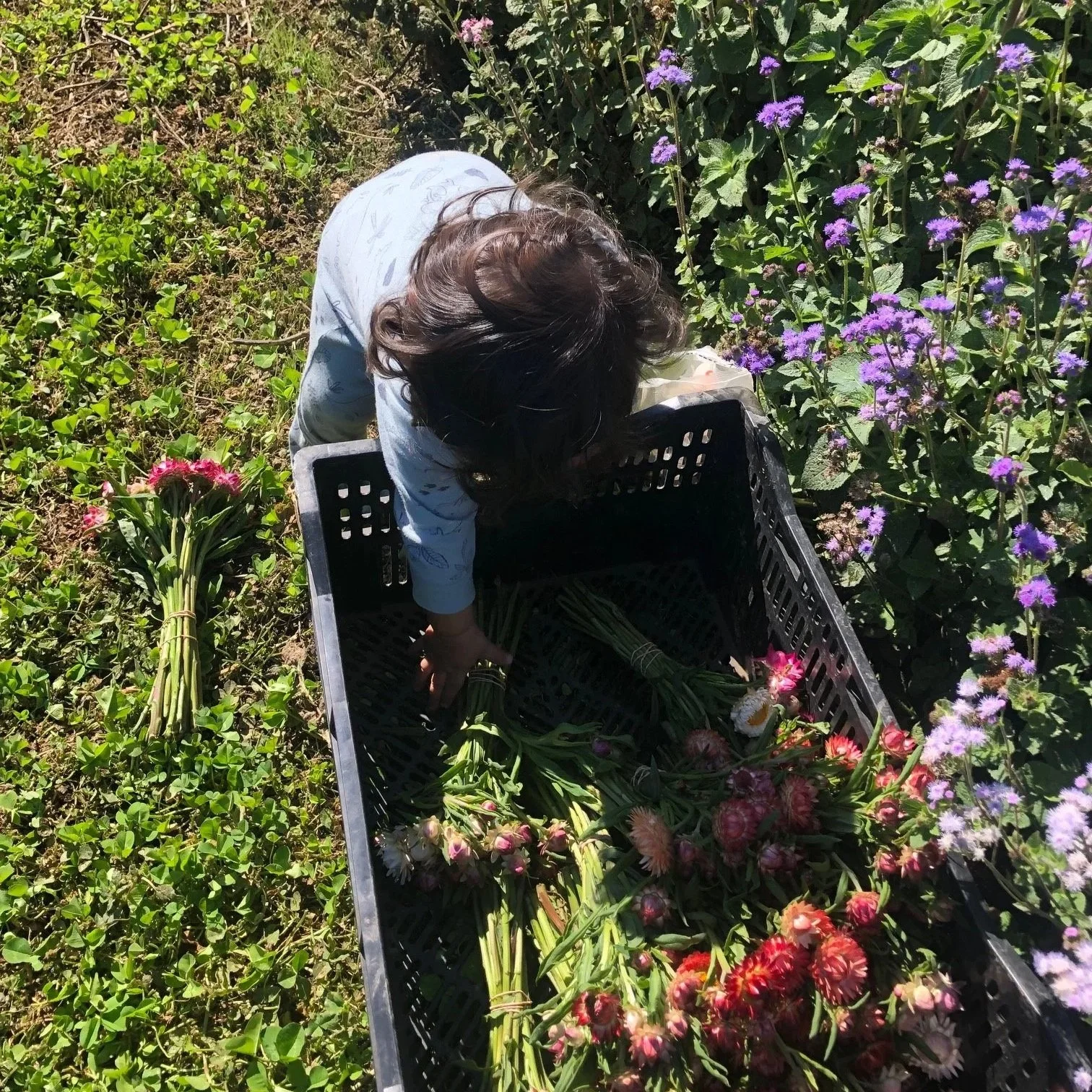
My second boy was different. He always wanted to stay close to me. He wasn’t much of an explorer, but that season became a journey that Kelsey and I shared together—planting, harvesting, and carrying our sweet boys as we worked the land. We taught them about plants, let them get dirty, and yes, even let them eat a little dirt along the way because that’s what discovering the world means.
I’ve worked this field for the past six years, and somehow it doesn’t feel like that long. The soil, the land, and the seeds have a way of slowing time. They remind me to move with patience and peace, trusting that growth happens in its own time.
This season has felt different.
I’ve sown, planted, pinched, weeded, and harvested with a little more grace, knowing that our family is growing too. In just a couple of weeks, we’ll welcome a new little life into this world. I’ll step away from the field for a little while, and although I’ll miss these daily rhythms, I know the garden will keep growing, just as it always has.
What I look forward to most is introducing our third baby boy to this place that has held so much of our family’s story. I can’t wait to watch him discover the flowers, the soil, and the wonder of the garden in his own way, just like his brothers did.
Creating life has never just meant growing flowers.
For me, it has meant growing a family alongside them—one season, one bloom, and one day at a time.
Open Field Farm 2026 | The "ALL YOU NEED TO KNOW" guide for members
Upcoming Event: BBQ and Baseball Sunday 8/2 at 4 pm
CSA Barn Hours:
Summer hours: 2:30-6:30 pm
Pick List:
Eggs
Yaya Carrots
Merlin Beets
Hakurei Turnips
Gold Princess Onions
Parade Scallions
Cocozelle and Dark Star Summer Squash
Mideast Peace and Manny Cucumbers
Farao, Caraflex, and Emiko Cabbage
Madeley Kale
Champion Collards
Rhubarb Chard
Lettuce
Cilantro, Dill, Basil, and Parsley
Strawberries
Whole Dried Hot Peppers
Herbal Tea Blends
Pick Your Own Flowers, Herbs, and Raspberries
Filigreen Farm Blueberries for sale
Beef Bone Broth (Made by Olla Products)
Apollo Olive Oil
Revolution Bread available
Open Field Farm Swag!
ROSE PETALS JAM RECIPE
https://simplybeyondherbs.com/rose-jam-recipe/
2 cups fresh rose petals or 2/3 cup dried rose petals
juice from 1/2 lime or 1/2 lemon
25 g pectin (0.85 oz)
1 tbsp vanilla extract - optional
2 tablespoons raw honey or 1 cup (200 g) sugar
1 1/2 cup filtered water
Start with preparing the roses. If you are using dried, you can skip this step. Just note that you will need ⅓ cup of dried petals for 1 cup of fresh ones. Fresh blossoms are best collected in the morning on a sunny day. I don’t wash them as you will remove the pollen that is a carrier of flavors and taste. Just mechanically remove any bugs or dirt.
Add the rose petals to a large saucepan with lukewarm water, and allow them to steep overnight. This process, whether using dried or fresh petals, helps to infuse the jam with a distinctive and rich rose flavor.
Strain the rose petals through a sieve or cheesecloth. This step is optional and depends on whether you want to keep the petals in a jam or strain them to make rose jelly.
Next day, add pectin to the rose water mixture(with or without the petals) and bring it to a rolling boil for 1 minute. This boiling is important for the pectin to get activated so that your jam will set. Reduce the heat and simmer over medium-low for 10 minutes until the pectin has dissolved, stirring constantly. If you are using sugar, you should add it at this stage. sugar and pectin will dissolve together.
Add the lemon juice and increase the heat to medium-high. Continue to stir, and watch the vibrant color that emerges. The mixture will still be loose at this stage. Continue to simmer for another 5 minutes. Remove from heat, cover it with a lid and let stand for 10 minutes. and add raw honey. Skim off any foam with a metal spoon.
Add raw honey and vanilla extract (if using) and wait for the jam to begin thickening when the temperature cools. The thickening point varies depending on the choice of agent, batch size, and pan size. The more jam you make, the longer it will take to reach the setting point. I like to place one tablespoon of the jam in the fridge to cool completely and see if the jam sets. Pour into sterilized jars.