
By Celeste
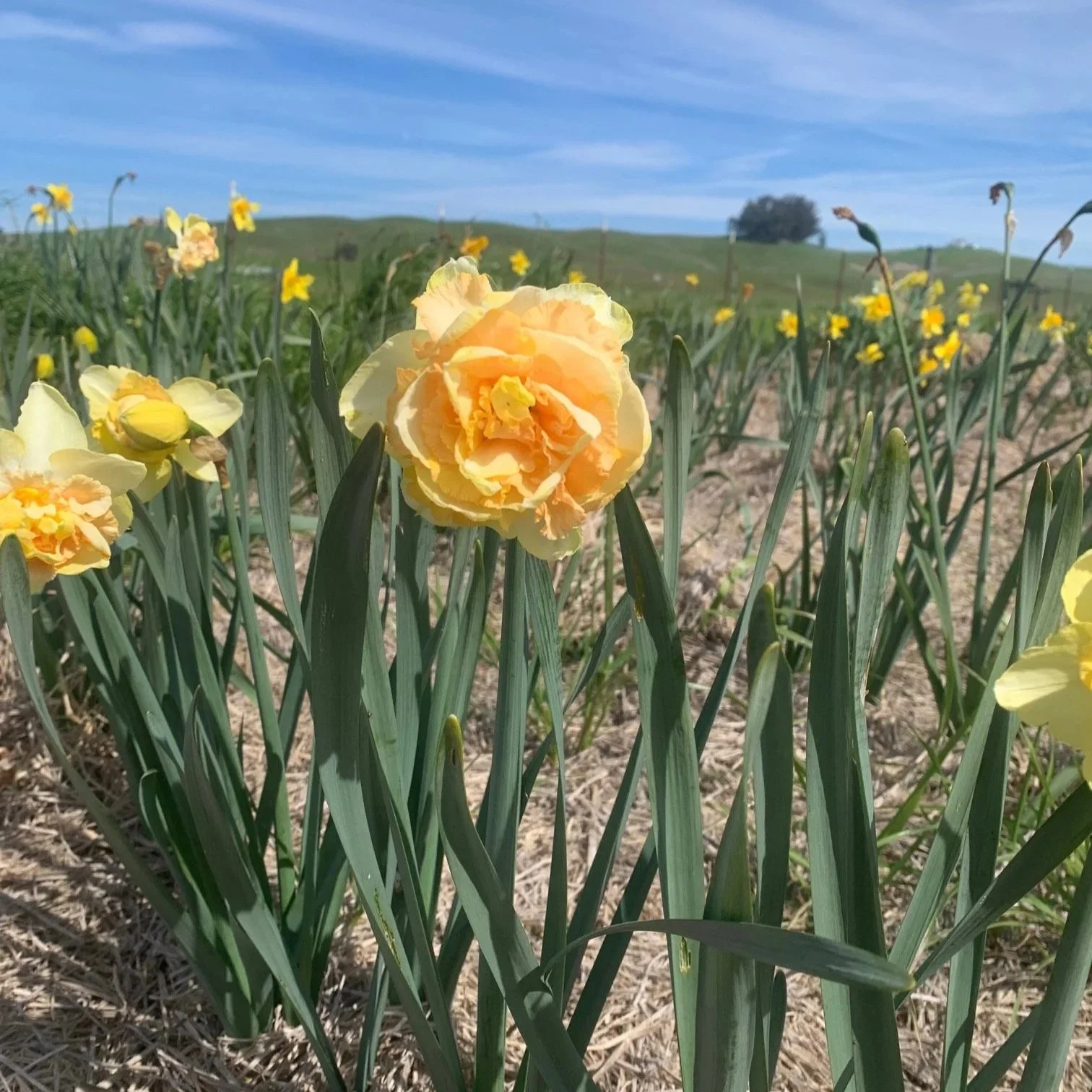
I think daffodils are underrated. There’s something about those late winter, early spring blooms—the kind that show up when everything still feels a little quiet—that I really love.
Last season, the daffodil patch turned into a big project Kelsey and I spent time choosing which new varieties we wanted to bring onto the farm. We were a bit late getting into the winter flower market, so our options were limited, but we worked with what we had and made thoughtful choices.
Planting was a full team effort. Everyone helped get the bulbs in the ground, and it wasn’t something we could rush. Each one had to be placed just right—roots down, top up, making sure none were soft or rotten, and planted about six inches deep. Afterward, we covered the entire patch with around 25 hay bales. It needed to be thick and fluffy, properly insulated for the colder stretch ahead. The dogs definitely approved of that part—they claimed it as their resting spot almost immediately, just sprawled out and snoring like they had done all the work.
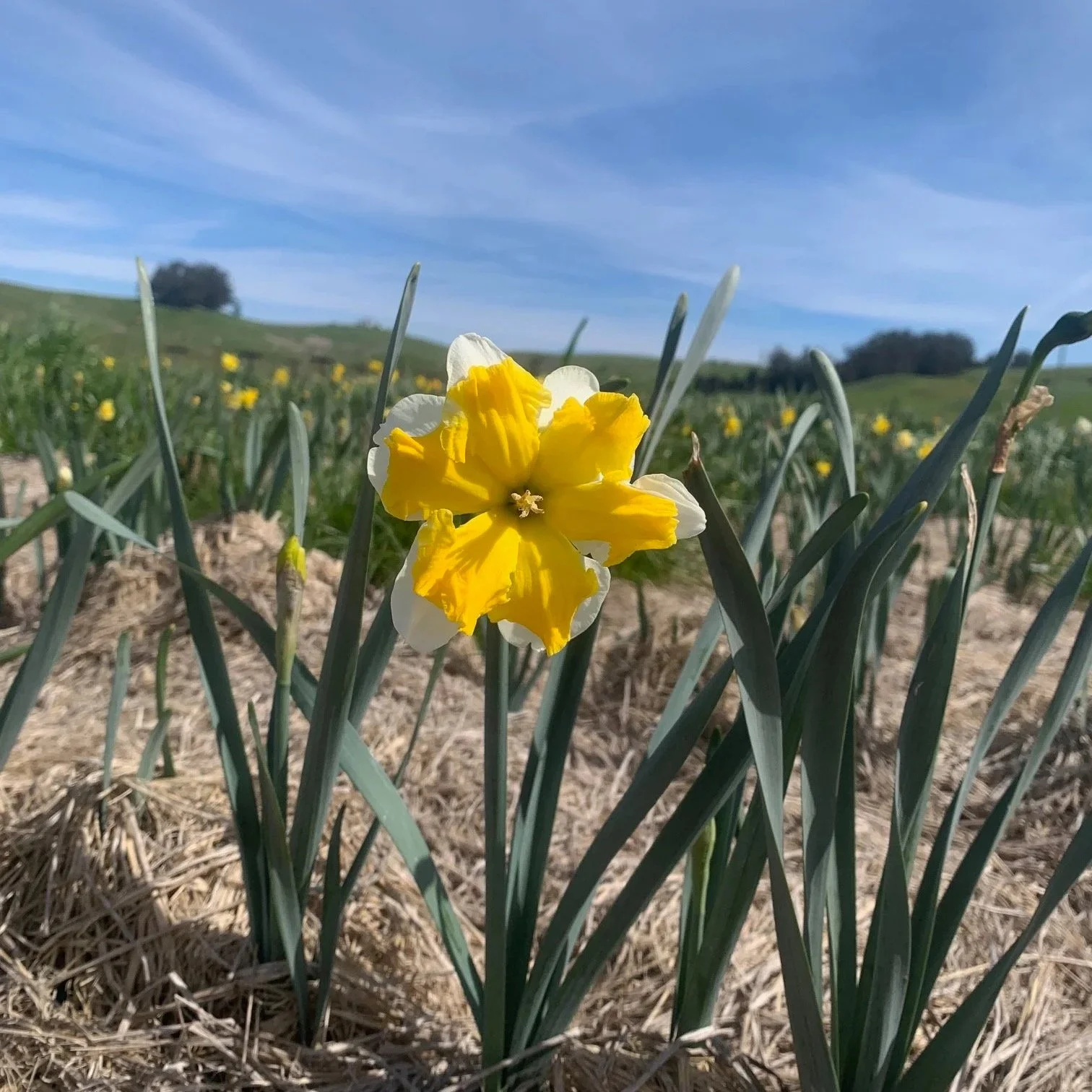
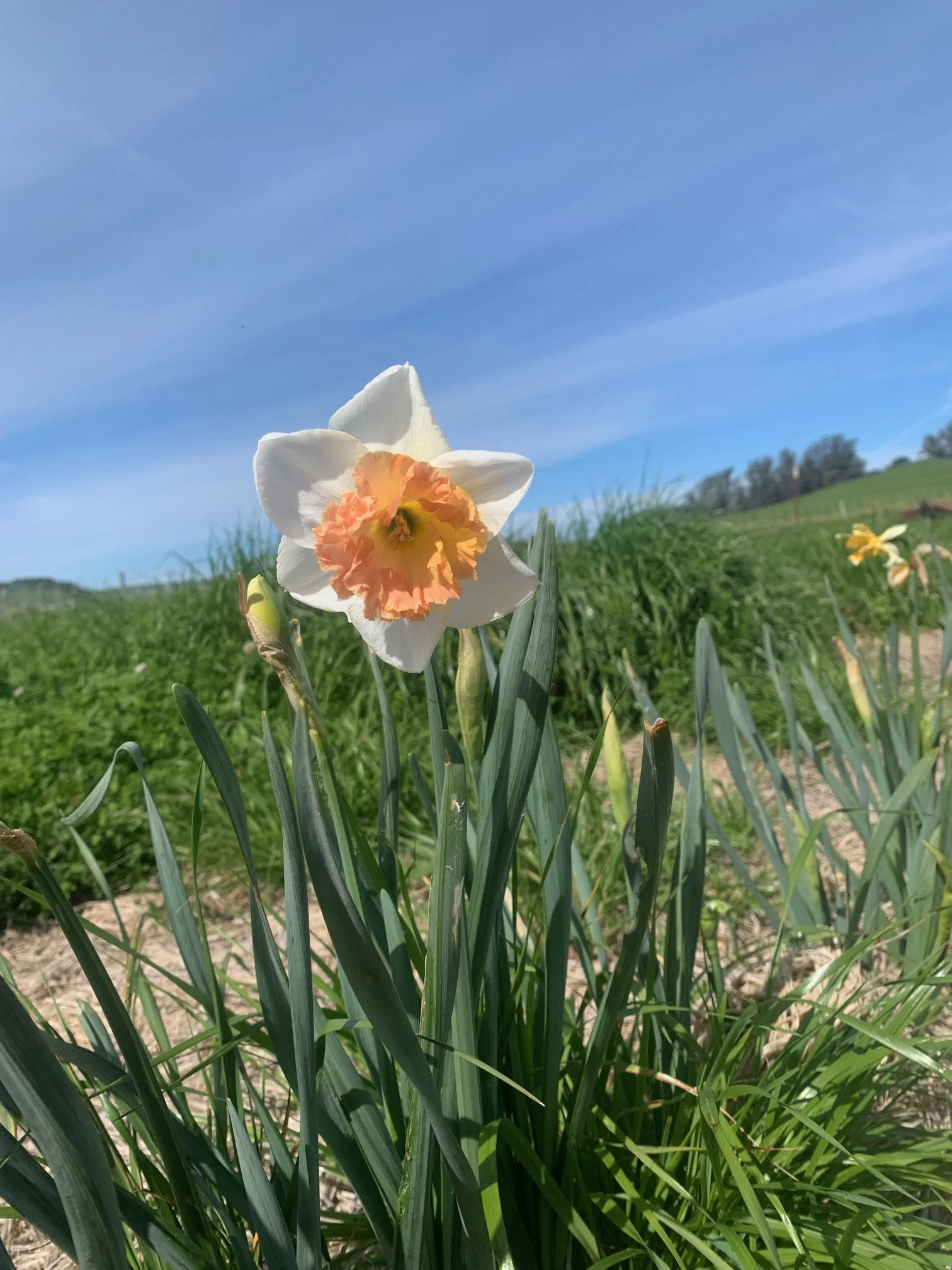
Daffodils always feel like a marker of transition. They’re one of the first signs that things are shifting again—longer days, warmer soil, a reset of sorts. There’s a quiet kind of meaning in that, a reminder that change doesn’t have to be loud to be real.
Spiritually, daffodils are often seen as symbols of renewal, new beginnings, and inner reflection. Because they bloom at the edge of winter, they carry this sense of quiet resilience—pushing through cold ground to return again. They’re also tied to the idea of self-awareness and transformation, a reminder to turn inward, take stock, and grow from where you are before stepping into what’s next.
On another note—we’ve got cornmeal.
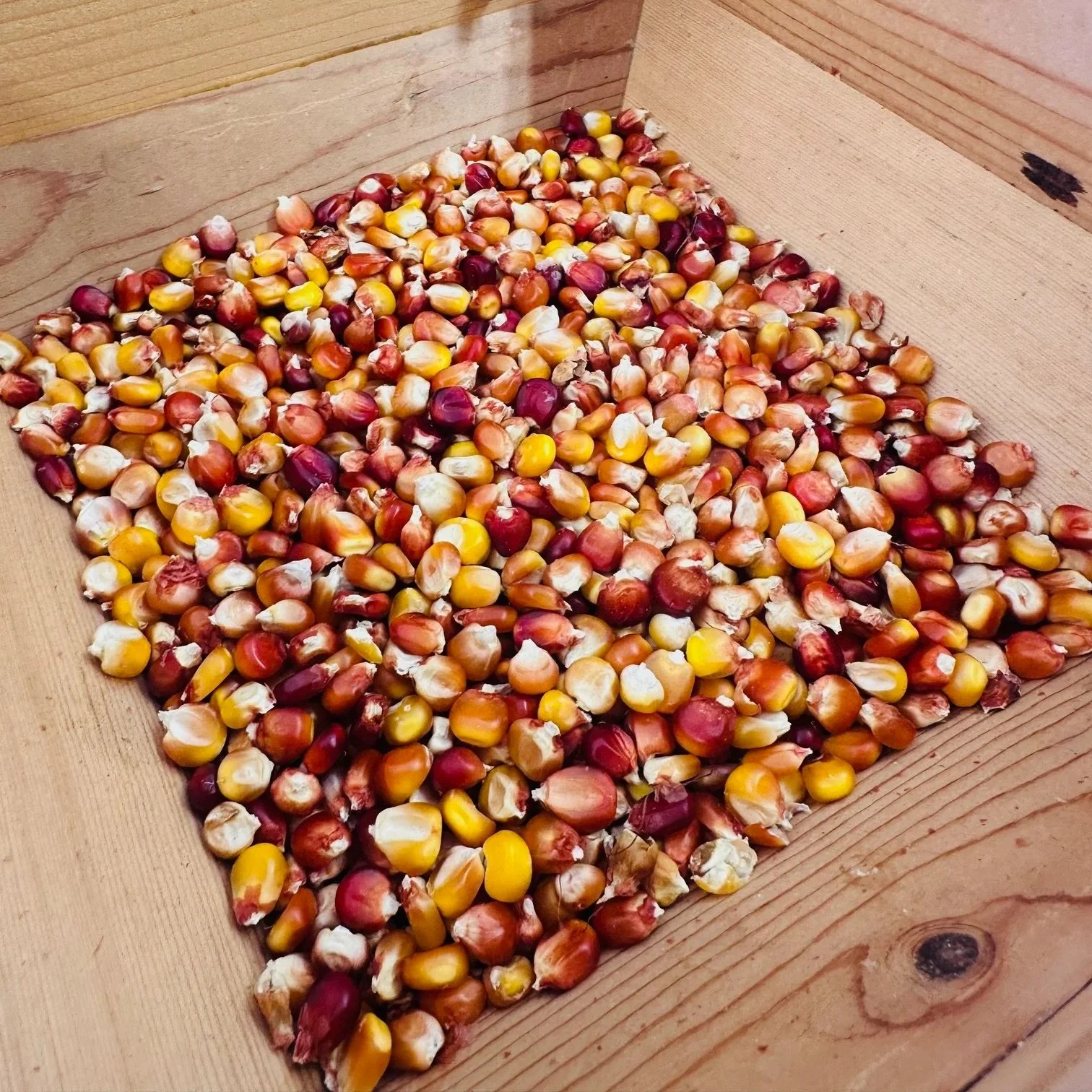
Last week I started processing the dried kernels, and this batch is something I’m really proud of. It’s clean, simple, and carefully handled. We don’t process flour and kernels in the same machine, so there’s no flour residue or cross-contamination to worry about.
I’ll be honest, I don’t usually bake cornbread myself. But I do love it—especially when Sarah makes it. It’s one of my favorite things (among many others, of course).
Cornmeal is one of those ingredients that can go a lot of different ways. Of course there’s cornbread, but it’s also great for things like polenta, crispy coatings for fried vegetables or fish, corn muffins, pancakes, or even a simple dusting for baking trays. It’s versatile in a way that feels both practical and comforting.
Our first batch is ready for you to enjoy today.
Perfect Cornbread
www.inspiredtaste.net/51434/cornbread/itr_print/
4 tablespoons unsalted butter, melted (56g)
1 cup fine or medium ground cornmeal (138g)
1 cup all-purpose flour (130g)
1/3 cup packed light or dark brown sugar (67g)
2 teaspoons baking powder
1/2 teaspoon baking soda
1/2 teaspoon fine sea salt
1 cup whole milk or well-shaken buttermilk (236ml)
4 tablespoons vegetable oil, divided (60ml)
1 large egg
Heat the oven: Preheat the oven to 400°F (204°C). We recommend allowing cornbread batter to sit for 10 to 15 minutes before baking, so if you prefer, you can delay heating the oven until you make the batter.
Prepare butter: Melt the butter, and then set it aside to cool slightly.
Mix dry ingredients: Whisk the cornmeal, flour, brown sugar, baking powder, baking soda, and salt in a medium bowl until well blended.
Mix wet ingredients: Whisk the milk (or buttermilk) with three tablespoons of vegetable oil and the egg.
Make the batter: Pour the milk mixture into the bowl with cornmeal and flour. Gently stir or whisk until the batter is mostly combined. Add the melted butter, and then stir until the batter is blended.
Let the batter sit: Set the cornbread batter aside for 10 minutes before baking. If you’re waiting to preheat your oven, now is an excellent time to turn it on.
Preheat skillet: Two to three minutes before baking the cornbread, place a 10-inch cast-iron skillet or 9-inch baking pan in the oven to heat.
Bake cornbread: Carefully remove the hot cast iron pan or baking dish from the oven. Add the remaining tablespoon of oil and swirl it around the pan. Then, carefully add the batter to the oiled pan. Smooth the top, and then bake for 20 to 25 minutes, or until the center is firm and a toothpick inserted into the center comes out clean. Allow the cornbread to cool for 10 minutes before slicing and serving.
Open Field Farm 2025 | The "ALL YOU NEED TO KNOW" guide for members
CSA Barn Hours:
First week of Summer hours: 2:30-6:30 pm
Pick List:
Eggs
Nicola Yellow, Harvest Moon Purple, Red, and Fingerling potatoes
Merlin Beets
Yaya Carrots
Hablange Parsnips
Verdonnet Leeks
Rutabaga
Mars Celeriac
Rhubarb Chard
Fava Greens (Remove from the stalk and cook like spinach or eat it raw!)
Castelfranco and Radicchio
Cilantro and Parsley
Tetsukabota and Butternut Winter Squash
Pie Pita Pumpkins (The flesh is great for pies and the seeds are super delicious!)
Whole Dried and Ground Hot Peppers
Herbal Tea Blends
Fresh cornmeal
Pick your own flowers and herbs
Beef Bone Broth (Made by Olla Products)
Apollo Olive Oil
Revolution Bread for sale on Tuesday and Friday
Open Field Farm Swag!